
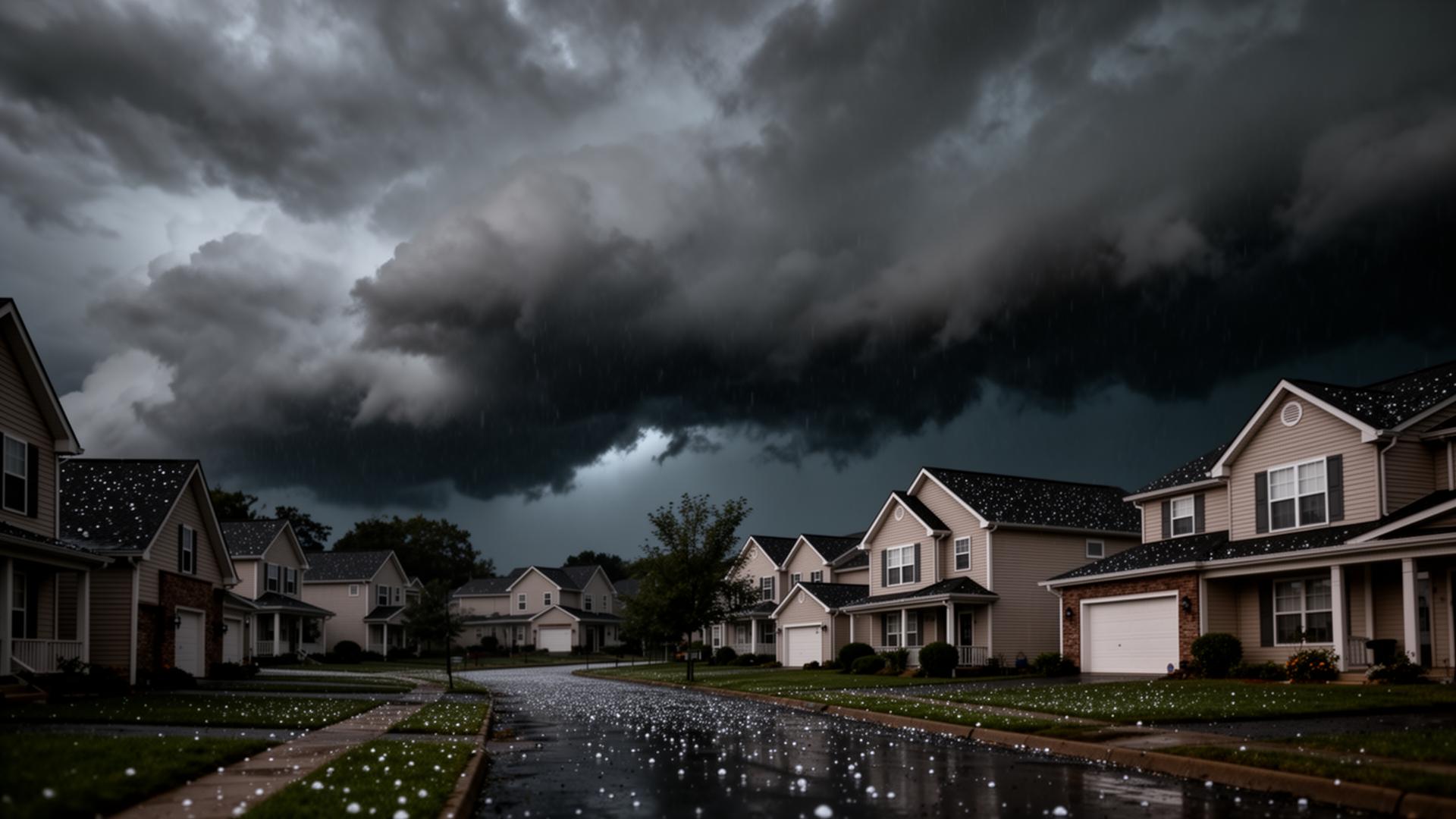
Central Pennsylvania sits in a corridor that sees a mix of severe weather every year — Atlantic-driven nor'easters, summer thunderstorm complexes, springtime hail cores, and the occasional remnant of a tropical system. Roofs across Harrisburg, Lancaster, York, Reading, and Lebanon take a beating, often in ways homeowners cannot see from the ground. This article breaks down the most common storm-related damage patterns REP sees in Central PA and what to do when your home is in the path of a major event.
Hail Damage: The Quiet Problem
Hail does not always punch holes in a roof. More often, it bruises the asphalt mat by knocking the ceramic granules loose at the point of impact. From the ground the shingle looks fine. From a ladder you can see dark, soft circles roughly the size of the hailstones that hit. Those bruises shorten the roof's life by years and absolutely qualify as insurable damage.
Spring hail events along the I-83 and I-81 corridors are common enough that REP recommends a documented inspection any time a storm of three-quarter-inch hail or larger passes over your address.
Wind Damage: Lifted, Creased, and Missing Shingles
Sustained winds above 50 mph routinely lift the tabs of asphalt shingles, breaking the factory adhesive seal. Once that seal is broken, the shingle is no longer wind-rated and the next storm can tear it free. Look for creases across the face of the shingle, exposed fasteners on the row above, and any missing tabs or full shingles.
Wind-Driven Rain and Flashing Failures
Pennsylvania storms often combine heavy rain with strong wind. Water that would normally run downhill gets pushed sideways under shingles, around chimney flashing, and behind step-flashing on dormers and sidewalls. Most chronic post-storm leaks are not in the field of the roof — they are at penetrations.
Damage to Gutters, Soffit, and Fascia
Hail dents gutters and downspouts. Wind tears soffit panels free at the eaves. Falling tree limbs damage fascia and rip gutters off the house entirely. When you call for an inspection, REP looks at the whole exterior system, not just the shingles, because adjusters expect the full picture and homeowners deserve the full picture.
What To Do In The First 48 Hours
Move quickly but do not panic. Walk the perimeter of your home and photograph anything visible from the ground. Check the attic for active leaks. If water is coming in, place buckets and pull furniture away from drip lines. Do not climb on a wet roof — call a professional.
- Photograph all four sides of the home from the ground.
- Note the date, time, and a general description of the storm.
- Check the attic for active leaks.
- Call REP for a documented free inspection before contacting your insurance company.
Regional Notes For Central PA Homeowners
Harrisburg, Mechanicsburg, and Camp Hill homeowners often see wind events tracking up the Susquehanna River valley. Lancaster and Lebanon County see the heaviest hail in late spring and early summer. York and Hanover sit at the southern edge of the corridor and frequently catch the leading edge of storm complexes moving northeast. Each of these patterns produces slightly different damage signatures, which is why a local inspector matters more than a national 1-800 hotline.
Storm Just Rolled Through Your Neighborhood?
REP performs documented free roof inspections across Central Pennsylvania. We will tell you exactly what we find and whether a claim makes sense.