
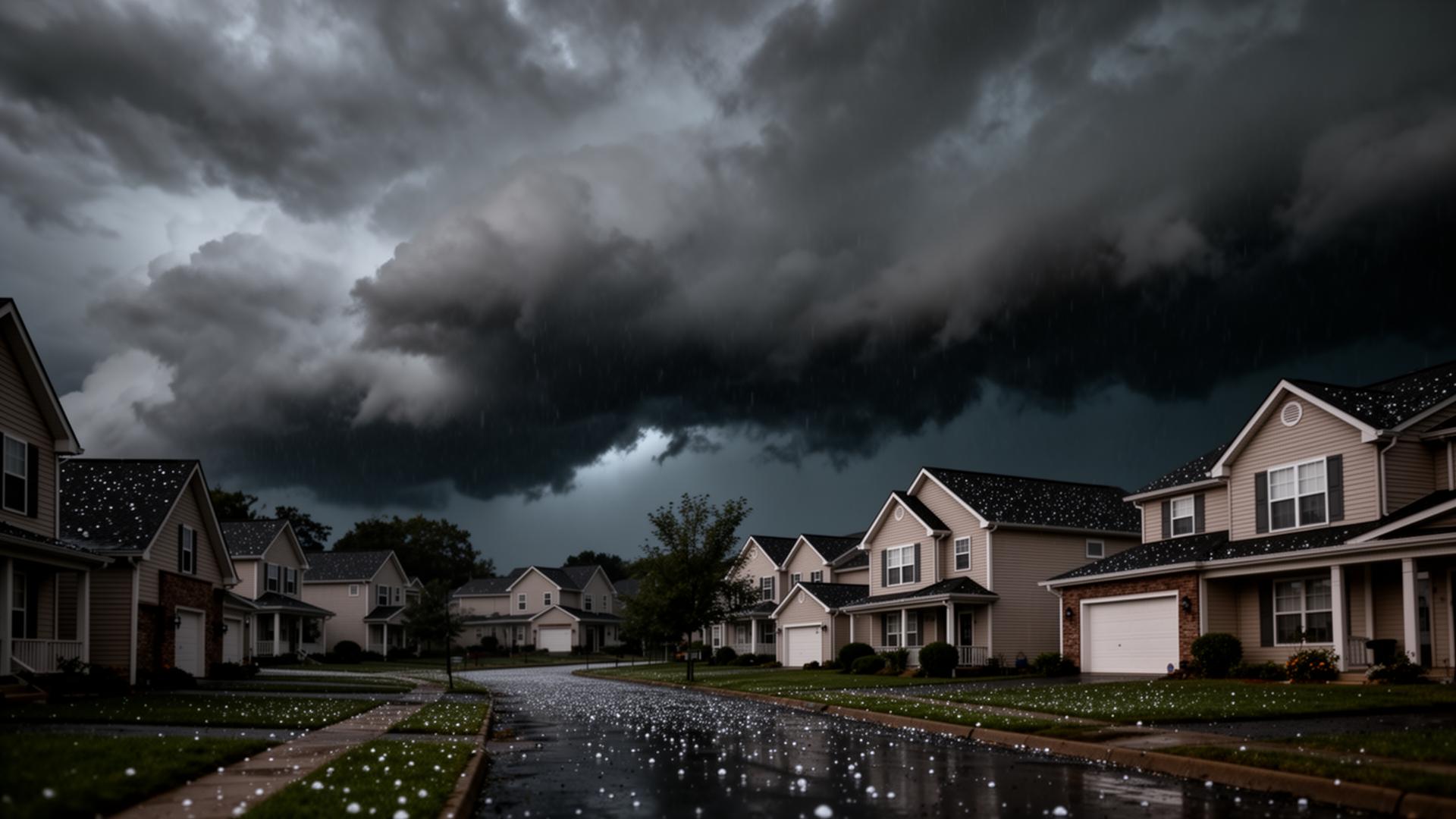
Wind damage is the most under-reported category of storm damage in Pennsylvania. Hail leaves obvious bruises and dented gutters; wind damage often hides in plain sight until the next rain finds it. This article gives homeowners seven specific things to look for after any significant wind event — none of which require climbing on a roof.
1. Missing Shingles
The most obvious sign — and the easiest to miss from the sidewalk. Walk all four sides of the house and look up at every slope. Even one missing shingle exposes the underlayment and decking to water.
2. Creased or Lifted Shingles
Wind that lifts a shingle but does not tear it free leaves a horizontal crease across the face. Once the factory adhesive seal is broken, the shingle is no longer wind-rated even if it lies back down. The next storm finishes the job.
3. Exposed Fasteners and Underlayment
Look for nail heads or felt paper visible on the slope. Either one means the shingle that should be covering it is gone or shifted.
4. Granules Piled at Downspouts
Wind-driven rain accelerates granule loss. Heavy granule piles at downspouts after a storm — when there were none before — often signal abrasion and shingle damage.
5. Bent or Twisted Flashing
Step flashing on dormers, drip edge on eaves, and chimney flashing can all be bent or twisted by sustained wind. Bent flashing creates a direct water path under the shingles.
6. Damaged Soffit and Fascia
Aluminum soffit panels often pop loose in high wind. Vinyl soffit can buckle. Damaged fascia indicates the gutter system took a hit too.
7. New Interior Stains After a Storm
Walk every ceiling and look at the corners of upstairs walls. Even small new stains tell you water is finding its way past the roof system — and that the problem will get worse with each storm.
Wind Just Came Through? Get A Free Inspection.
REP documents wind damage in a way that supports both your peace of mind and your insurance claim. No cost, no obligation.